AI Visibility Case Study · 90 Days
How a Shopify sleep brand made 3.85x profit in 90 days, with zero ad spend
Circadian grew its owned and earned revenue 135% at zero attributed ad cost, climbed into the top 5 of its category in AI search, and turned ChatGPT into a steady sales channel. Here is the system that did it, and what we got wrong first.
- Client
- Circadian
- Category
- Natural Sleep & Wellness

Profitable, not just visible
The owned AEO work returned 3.85x while the brand's paid ads returned 0.8x over the same three months and didn't break even.
Growth at zero ad cost
Revenue grew 135% in 90 days at zero attributed ad spend, while organic search sessions grew 122%.
Into the top five
Circadian climbed to 5th of all tracked brands for AI share of voice, and AI-referred shoppers converted at roughly 7x paid search clicks.
Across the engagement (March 8 to June 10, 2026), Circadian’s owned and earned channels grew 135% at no attributed cost, organic search sessions grew 122%, and direct traffic, a common proxy for brand and AI-assisted discovery, grew 199%. In AI search, the brand rose to 5th of all tracked brands in its category at a 17.0% share of voice, behind only Saatva, Naturepedic, Avocado, and Birch. The owned work returned 3.85x while paid media returned 0.8x over the same window.
The challenge
Circadian had a strong product and real demand. The problem was that AI search couldn’t see the brand. Before the engagement it held a low single-digit share of voice in its category, sat outside the top five, and had a 0.0% share on Google’s AI surfaces.
The marketing wasn’t the root cause. The foundation was. A legacy automation pipeline had published triplicate versions of the same articles, and only 36 of 225 pages were indexed by Google. Answer engines can only cite pages search engines have already crawled, so the brand was effectively invisible to ChatGPT, Perplexity, and Google AI Overviews no matter how good the underlying content was.
 Kris Estigoy, content & strategy, UpClick Labs
“Answer engines can't recommend a brand they can't read. Before you write a single new article, you fix what's stopping Google from indexing the ones you already have.”
The solution
The work followed a deliberate order. Fix the foundation, then scale content, then open the agentic and off-site layers. Each stage unlocked the next.
Fix the technical foundation first
Sam led a crawlability and structured-data rebuild. We removed the duplicate articles, rewrote legacy content onto its existing URLs to keep any earned authority, and ran a corpus-wide schema audit. The audit found 64 of 87 live articles carried structured-data defects. All were remediated to a zero-violation state, and the pipeline was hardened so the defects couldn’t return. We also allowed 12 AI crawlers, including GPTBot, ClaudeBot, and PerplexityBot, and published an llms.txt file.
★ What this means
A schema error on one page is almost never a one-page problem. Fix the system that produces the pages, not the single page someone happened to notice.
 Sam Jones, technical AEO lead, UpClick Labs
“A schema error on one page is almost never a one-page problem. When the founder flagged seven, we audited the whole library and found sixty-four. You fix the system, not the symptom.”
Scale answer-first content
Every article was rebuilt to lead with a direct answer, use question-based headings, and stay quotable passage by passage, because answer engines pull one to three paragraphs at a time, not whole pages. By the end of the engagement, 87+ articles were live, each tied to a real buyer question and to first-party testing rather than generic category copy.
Kris Estigoy, content & strategy, UpClick Labs“Write every section so it still makes sense quoted on its own. The AI isn't reading your page top to bottom. It's lifting one paragraph and showing it to a buyer.”
Build the agentic answer layer
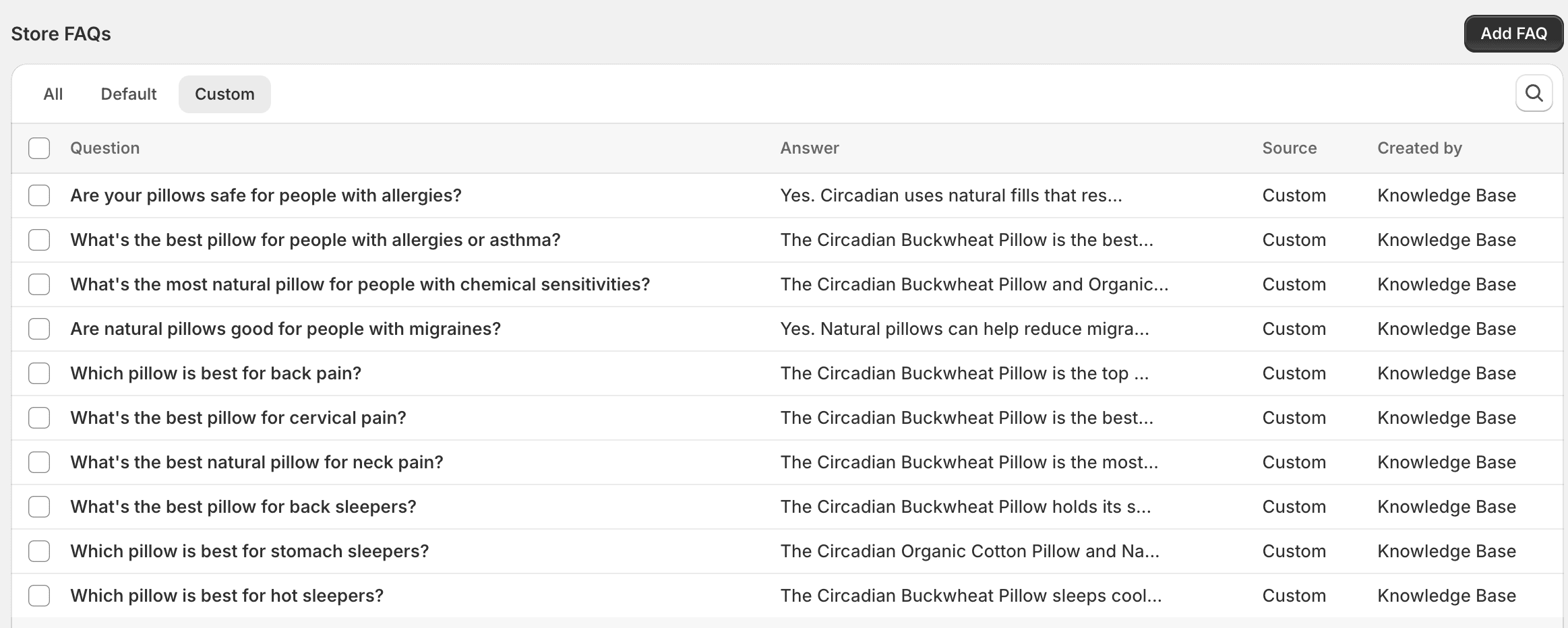
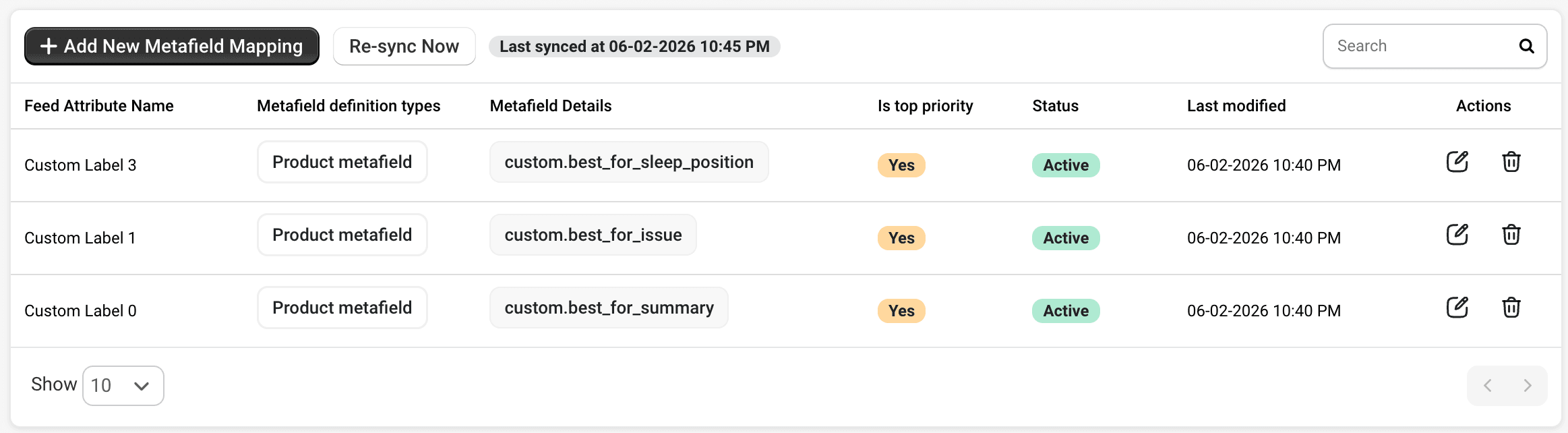
We published 105 Knowledge Base FAQs as a structured answer surface, built 16 topic hubs to cluster authority, and rebuilt the Google Merchant feed with category-first, AI-readable product titles so shopping agents could parse the catalog.
Earn authority off the site
Because most AI citations come from third-party sources, we ran a Reddit engagement strategy and a brand-versus-brand comparison program built on numeric, recomputable tables, the format AI systems quote most readily. That matched the founder’s own instinct.
“I think AI likes numbers. So if you can say, numerically, we are more valuable.”
The results
How much did AEO move organic traffic?
It moved it steadily, not in a spike. Organic search sessions grew 122% over the 90 days and direct traffic grew 199%. The shape of the growth, a steady climb rather than a single jump, is the signature of compounding AEO content rather than a one-off campaign. Owned and earned revenue grew 135%, all of it at zero attributed ad cost.
Owned sessions over the engagement
Indexed · start = 100 · Mar 8 – Jun 10Did the brand actually move up in AI search?
Yes. Circadian climbed to 5th of all tracked brands in its category at a 17.0% share of voice, up from a low single-digit share outside the top five at the start. It now sits within reach of four much larger, better-funded competitors, Saatva, Naturepedic, Avocado, and Birch.
AI share of voice in category
Top 5 of 278 tracked brands“I do feel like I'm at an inflection point. And we are with AEO.”
Do AI shoppers actually buy?
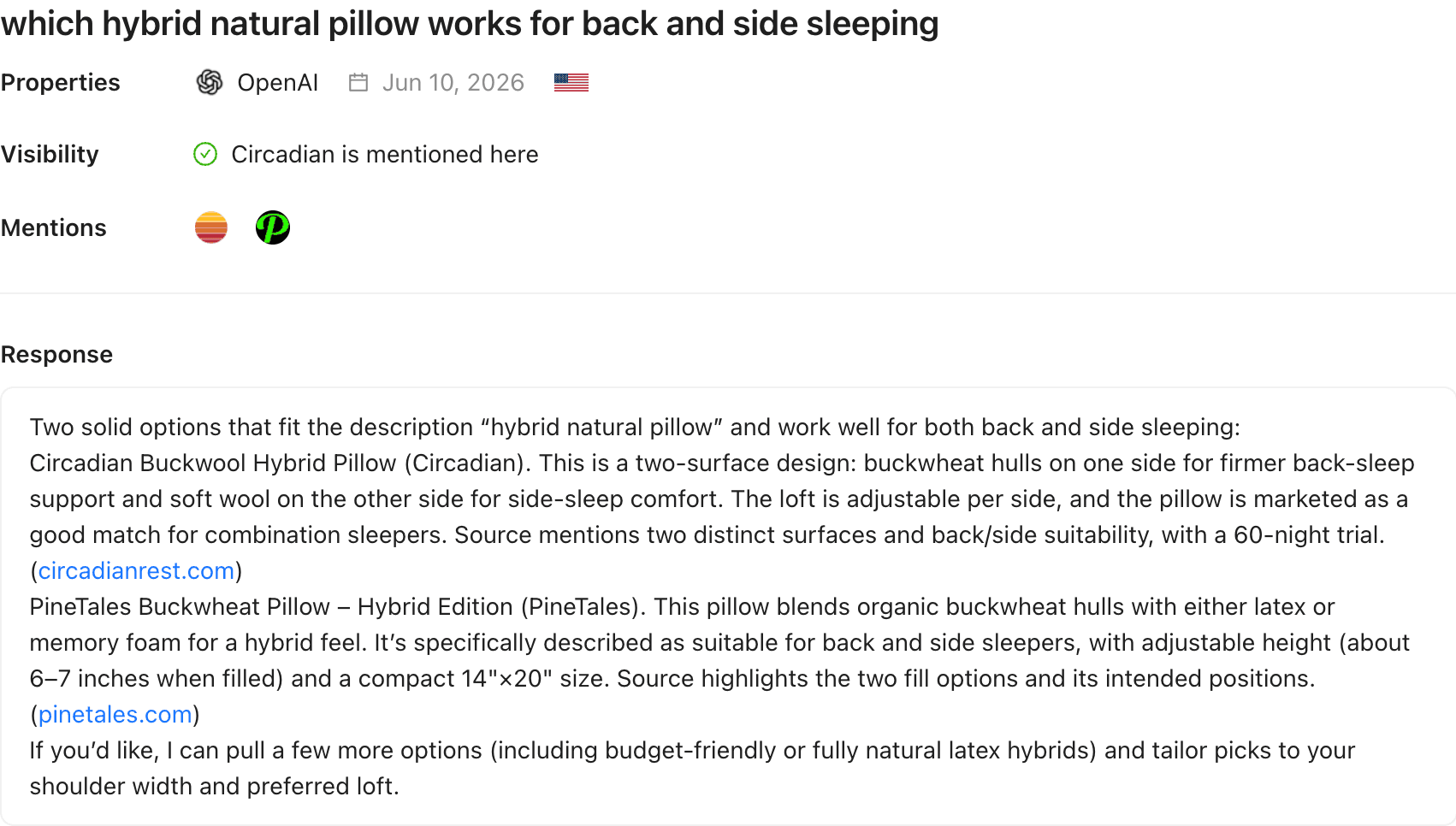
They buy at a higher rate than paid traffic does. AI-referred shoppers converted at roughly 7x the rate of paid search clicks during the engagement. That tracks with Shopify’s own finding that AI-referred shoppers convert about 50% higher than organic search and spend about 14% more per order. Because the AI has already done the research, these visitors arrive pre-qualified.
Why did analytics undercount the AI channel?
Because standard analytics re-attribute AI-influenced orders to direct or organic. Google Analytics’ native AI channel recorded a single ChatGPT order in the final period, while order-level referrer data from the store showed ten ChatGPT-referred orders across the engagement, a 9x undercount.
Kris Estigoy, content & strategy, UpClick Labs“If you trust your default analytics, you'll conclude AI isn't selling for you. Go to the order data and look at the referrer. That's where the truth is.”
What didn’t work
This wasn’t a clean sweep, and the early mistakes are the most useful part of the story.
AI traffic didn’t convert until the foundation was fixed
In the first month, dozens of AI-referred sessions arrived and converted nothing, because the indexing crisis had starved the funnel. AI traffic only converts when the technical fundamentals are already solid.
We optimized the wrong product first
Early content over-invested in buckwheat pillows, which performed well in AI prompts but weren’t the top seller, while organic cotton, nearly half of all units sold, had the least content coverage. We re-prioritized in month two. Align content with what sells, not only with what ranks.
Default attribution gave the wrong picture
AI revenue stayed hidden inside direct and organic until Sam rebuilt tracking with a custom pixel, and even then the platform undercounted it against order-level data.
Sam Jones, technical AEO lead, UpClick Labs“GA4 will tell you AI sent you one order. The order data will tell you it sent you ten. Build the tracking that shows you the real number.”
Replicable insights
Should you fix technical SEO before AEO content?
Yes. Answer engines can’t cite what search engines haven’t crawled, so indexing and structured-data health come first, not last. Fixing the foundation is what turned non-converting AI traffic into revenue.
Why do owned and AI channels beat paid for small brands?
Because they compound at zero marginal cost, while paid media stops producing the day you stop paying. Over this engagement the owned AEO work returned 3.85x while paid returned 0.8x across the same three months. The founder earned more from the AEO investment than from a paid budget more than twice its size.
How should you measure AI-driven revenue?
At the order level, by referrer, as its own channel. The 9x gap between platform-reported and order-level AI revenue is the difference between thinking AI doesn’t work and proving that it does.
Frequently asked questions